
Skill of Reinforcement

Introduction

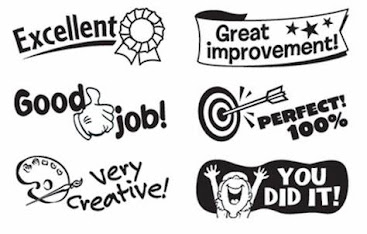
If the teacher is encouraging students with statements like good, that’s very good, good job, excellent then it is called reinforcement, it may be verbal and non-verbal. A classroom is always full of individual differences and instead of that every child needs social approval of his behavior. Just to satisfy the need they are always eager to answer each question known to him.  If a teacher is encouraging students by statements like good, that’s very good, good job, excellent and certain non-verbal expressions, such as smiling, nodding the head and paying attention to the responding student, in doing so the participation of student in the class is maximized. Statements like good, very good, excellent, and good job are reinforcement.


Objectives of reinforcement skills

  • To attract students and retain attention
  • To encourage pupil for +Ve behavior
  • To discourage pupils for -Ve behavior 
  • To increase pupils' confidence 

Components of the skill

1. Positive Reinforcement

  1. A dog trainer giving a dog a biscuit when she performs a trick.
  2. A father providing his child with a piece of candy for picking up his toys.
  3. A teacher handing out gold stars to children that turn in their homework on time.
  4. A babysitter telling her charge “Great job!” when he puts away the dishes.
  5. A boss is offering her employee a raise when he goes above and beyond on a project.

2. Positive non-verbal reinforcement

  1. gesture-posture 
  2. Body Language
  3. Eye Contact
  4. smiling
  5. approval of answer
  6. shaking head with a smile


3. Negative Reinforcement

The removal of undesirable situations and negative reinforcement is a term described by B. F. Skinner in his theory of operant conditioning. In negative reinforcement, a response or behavior is strengthened by stopping, removing, or avoiding a negative outcome or aversive stimulus. Aversive stimuli tend to involve some type of discomfort, either physical or psychological.

Note: "negative reinforcement is not a punishment"

4. Negative non-verbal enforcement

  1. Gesture-posture 
  2. Body Language
  3. Eye Contact
  4. Disapproval of answer
  5. shaking head for No


5. Wrong use of reinforcement

Sometimes reinforcement is given in a wrong timing therefore a teacher always has a good knowledge of how to give reinforcement? He/she must have the proper knowledge of giving reinforcement.

6. Inappropriate use of reinforcement 

Improper way of reinforcement.

See More
Skill of Explanation
Teaching Skills
Demonstration Skill

Reinforcement skills 
For example: when we praise a child for helping clean up the toys, they're likely to continue helping clean up in the future,


Comments

Post a Comment

if you have any doubts about topics related to the teaching learning process then please let me know.
please do not enter any spam link in comment box.

Popular posts from this blog

Type of test items

TYPE OF TEST ITEMS: An item is the basic unit of interaction on a test. What we often call a test  question  is more properly known as an  item ,  since it may not be worded as an actual question. The student's feedback is also more properly known as a  response  rather than an  answer , but we won't get too particular on that point. Items can be written in various formats, including multiple choice, matching, true/false, short answer, and essay. We will discuss some of these formats in another article. Since items are the actual points of interaction of students with the test, item quality is probably the most recognizable indicator of the overall quality of the test. High quality  test items  take time and effort to write, but are essential to a valid test. Items must test skills and knowledge of the subject at hand, not the student's test taking  skills.

Probing Skills for Tutors and Teachers

Skill of Probing Questions  Introduction It is very important for a teacher to ask questions during teaching in order to increase the thinking capability in students. probing is one of the best skill which helps students to solve the problems with the help of a teacher. These are the set of some ques and hint in the form of questions which a teacher ask during teaching for seeking further information, this may increase the thinking capability of students so that they can think in multiple fronts. This skill is very helpful when student go through deeply in order to have multiple answer, sometimes this is used for involving all students if they showing a bit less interest in the teaching learning process. Why Probing? In case of when students are unable to give the answer or give incomplete answer, teacher use probing skill for ques. For seeking further information. For gaining student's attention in the teaching learning process and we call it re-focussing. If the teacher want to g...

REINFORCEMENT SKILL(Reinforcement, what is reinforcement? why reinforce in teaching learning process?)

Reinforcement, what is reinforcement? why reinforce in teaching learning process? Microteaching onlybachelors The term reinforcement refers to the events or stimulus that increases the possibility of response. The reinforcement has a great impact in the teaching learning process, its a kind of reward that a teacher give to his/her student for a particular type of event or response during the class teaching. This is an art or skill we can say for a teacher that how he/she use the reinforcement during the course of his/her teaching. This teaching skill can be very effective to control and to teach a class if the students are little bit careless. We must remember one thing that we all are rewarded for what we do in our daily routine , and we also expect that reward get similarly it is equally important for teaching learning process Reinforcement will increase or strengthen the response.   For example: when we praise a child for helping clean up the toys, they're like...